Physio

Carpal Tunnel Syndrome

No Comments

What is carpal tunnel syndrome?

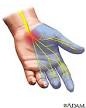
Carpal tunnel is a syndrome that is caused by compression on the median nerve. The median nerve runs from the forearm through the carpal tunnel to the palm of the hand. The carpal tunnel is a narrow passage way at the base of the hand. The median nerve supplies feeling to the palm side of the thumb and fingers (except the little finger). It controls the small muscles in the hand which allow the fingers and thumb to move.

Symptoms of carpal tunnel syndrome include;

  • Burning
  • Tingling
  • Numbness
  • Decrease grip strength

These symptoms are felt in the palm of the hand, thumb, index and middle finger. Symptoms may occur in one or both hands. Symptoms often occur at night.

Cause of carpal tunnel syndrome

Carpal tunnel s caused by increase pressure on the nerve as it passes through the carpal tunnel. Most likely this disorder is due to a congenital predisposition in other words you are born with a smaller carpal tunnel.

Other causes are trauma or injury to the wrist which leads to swelling in the carpal tunnel, fluid retention during pregnancy or menopause, mechanical problems of the wrist- work stress and repetitive use of vibrating tools.

Diagnoses of carpal tunnel syndrome

Carpal tunnel can be diagnosed by your physiotherapist or doctor. Assessments included checking sensation and muscle power as well as observing and palpating the wrist and hand. Other investigations include a nerve conduct ion test or MRI.

Treatment

  • Rest
  • Avoid aggravating activities
  • Immobilising the wrist with a splint
  • Ice to reduce swelling and inflammation
  • Stretching and strengthening exercises which can be prescribed by your physiotherapist
  • Surgery may be needed if symptoms don’t subside with conservative management
Physio

Is It A “Knot” Or Not?

No Comments

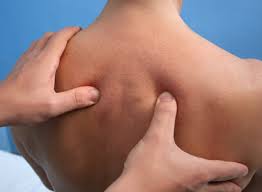
One of the most common causes of muscular pain is what is commonly termed “knots”. Another, more scientific term for “knots” is trigger points. They can be defined as an irritable spot within a taut band of muscle. They are often felt as tender, hard “pea-like” nodules within the muscles. It is thought that the taut band within the muscle affects its own blood supply which causes irritation and pain. Trigger points can occur in various areas of the body however the most common areas are in the neck, shoulders and back muscles.

After forming trigger points have two phases, namely an active trigger point and a latent trigger point. An active trigger point leads to pain, this pain could occur locally as well as it could refer to distant areas. For example, the muscle of the top of your shoulder called trapezius could develop a trigger point which refers pain up the side of your neck and face; it may also result in headache-like symptoms. Typical symptoms of a trigger point are pain, which is often described as a dull, achey and deep pain, stiffness and tension. Latent trigger points are very common and generally do not cause pain unless they are compressed or pushed on.

There are several factors which could predispose you to developing trigger points such as poor posture, repetitive mechanical stress e.g. typing for long periods of time, joint disorders and sustained loading of muscles e.g. carrying a briefcase or laptop bag.

Identifying and eliminating the predisposing factor for the development of trigger points is most important in the management of them for example, elevating your shoulder whilst working on the computer. A thorough assessment by your physiotherapist is very helpful in identifying these predisposing factors. Physiotherapist may also use several modalities to relieve your symptoms such as massage, ultrasound, heat or ice, transcutaneous nerve stimulation (TENS), dry needling and stretching.

Please contact your physiotherapist for an assessment and treatment.

Physio

Easy Steps To Avoid Exam Tension

No Comments

It is common to experience tension in our neck and shoulders whilst studying, the following tips may help reduce aches and pains during this stressful exam period….

  1. 1 Setup your desk correctly
  • Make sure that there are no obstacles under your desk, this will prevent you sitting at an awkward angle
  • Place frequently used objects such as a note pad and pens close to you and preferably directly in front of you
  • Place lower priority items further away
  • Raise your books by placing something underneath them, this will avoid you bending your neck excessively.
  1. 2 Chose a correct chair
  • Feet firmly on the floor or a foot rest if your chair is not adjustable
  • Avoid chairs that are too low or too soft
  • Sit as close as possible to the desk
  • Adjustable chair height
  • Adequate lower back support at belt level
  • Set your armrests to the correct height (avoid them causing your shoulders to be elevated)
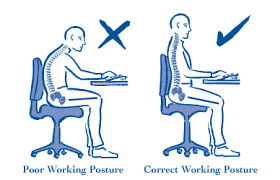
  1. 3 Sit with a good posture
  • Sit right back in your chair with your back firmly supported
  • Sit straight-no slouching!
  • Chin tucked in
  • Do not lean to one side
  • Avoid crossing legs
  1. 4 Take study breaks
  • Avoid sitting for longer than 45 minutes at a time
  • Use this time to rehydrate and get some healthy snacks
  • Use your study breaks to do shoulder relaxation and neck mobility exercises, see your nearest physiotherapist to advice on appropriate exercises.
Physio

Plantar Fasciitis

No Comments

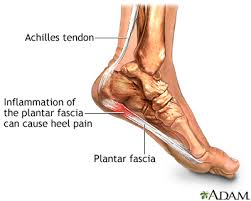
Your plantar fascia is a strong band of fibrous tissue (like a ligament) that extends from your heel to your middle foot bones. It supports the arch of your foot and also contributes to shock-absorbsion in your foot. Plantar fasciitis is an overuse condition affecting the area closest to the heel.

Around 1 in 10 people will suffer from plantar fasciitis at some stage in their life. Plantar fasciitis can occur at any age however, it is most common in people between the ages of 40 and 60 years. It is also more common in women than men. It is also common in athletes.

Signs and Symptoms

  • Gradual onset of pain
  • Pain over the inner aspect of your heel
  • Worse first thing in the morning or after long periods of rest
  • An ache after activity
  • Weight bearing on the foot may become painful
  • May be aggravated by stretching activities for example, walking upstairs or walking on your toes

Causes

  • Dropped (“flat feet”) or high arches of the feet
  • Poor walking pattern (excessively walking on the inside or outside of your feet)
  • Change in exercising surface for example changing from running on a track to running on the road
  • Change in exercise intensity
  • Wearing shoes with poor cushioning or support
  • Increased body weight
  • Excessive muscle tightness, and/or strength imbalances in you hamstrings, gluteal and calf muscle. This affects your normal walking pattern
  • Tightness in your Achilles tendon or decreased ankle mobility

Diagnosis

Your physiotherapist will be able to diagnose this condition and advice if further investigation, for example an ultra sound scan, is required.

Management

  • Avoid/ reduce any aggravating activities
  • Ice
  • Stretching the plantar fascia and surrounding muscles (calf and hamstring)
  • Self-massage with a frozen bottle
  • Pain medication: as advised by your pharmacist or doctor

Physiotherapy management includes

  • Assessing and addressing your lower body and foot biomechanics
  • Providing you with appropriate stretching and strengthening exercises
  • Pain management: Soft tissue massage, electrotherapy, strapping
  • Advice on modification of foot wear
  • Advising on possible need for foot orthotics
Physio

Keep Moving During The World Cup

No Comments

With the 2014 world cup quickly approaching, we are all gearing up for hours in front of the television set. Researchers have linked sitting for long periods of time with a number of health concerns and musculoskeletal problems.

A soccer match is about 90 minutes long, the adverse effects of sitting can begin as soon as this!

Some of the adverse effects of sitting are as follows:

  • The couch does not offer the best support to our backs; slouching can lead to muscle shortening and therefore pain
  • When we move around, soft discs between vertebrae expand and contract like sponges, soaking up fresh blood and nutrients. But when we sit for a long time, discs are squashed unevenly and could leave you prone to herniation of these discs.
  • When you remain active your abdominal muscles keep you upright. But when you slouch in a chair, they go unused. Tight back muscles and weak abs form a posture-damaging combination.

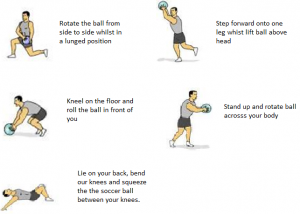
So, here are a few exercises that you could do with your soccer ball to prevent these adverse effects.

Should you have any medical or musculoskeletal problems, consult with your physiotherapist or doctor before attempting these exercises.

Physio

When To Use Ice Or Heat

No Comments

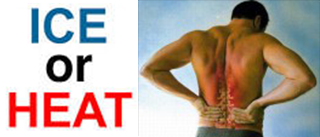
Acute injuries are sudden, traumatic injuries that occur and cause pain. In these cases the area of your pain can become inflamed. In this inflammatory phase the injured area become swollen, red, painful to move and warm to the touch. During this acute stage ice is used to bring down the inflammation.

Ice is the best immediate treatment for acute injuries to allow for a reduction of the inflammation in the injured area. Ice is a vasoconstrictor, which is narrowing of the blood vessels therefore slowing down the blood flow. This will reduce the pain and the swelling in that area.

To ice an injury, wrap ice in a towel and place on the affected area for 10 minutes. This allows the skin temperature to return to normal before icing again. You can ice an acute injury several times a day for up to two days

Heat may help to relax tight muscles or ease muscle spasms in the sub-acute or chronic phase of an injury (about 3-4 days after an injury). The heat increases the elasticity of the joint connective tissue and also stimulates blood flow which promotes healing. It is not advisable to use heat on an area which is inflamed, as this will increase the circulation of the blood and raise the skin temperature and therefore worsen the inflammation.

Heat can be used in the form of a wheat bag, heat pack or hot water bottle. Always rap the heat in a towel as not to burn you. It can be placed on the painful area for 10 – 20 minutes, 3 times a day.

If in doubt contact your physiotherapist for further information on what you should use.

Physio

When To Use Strapping

No Comments

Strapping is widely used amongst physiotherapists. There are many types of strapping available as well as many techniques which can be used. It is very important to match the correct strapping with the correct technique depending on what you wish to achieve with the strapping. It is used for different purposes which include preventative or therapeutic.

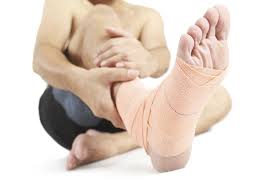
A more rigid tape is used to provide support to a joint by limiting excessive movement in cases such as a sprained ankle, knee or other ligament injuries.

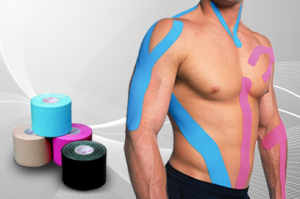
A popular strapping currently is Kinesio tape and can be recognised as the bright coloured tape worn by many sports players. When using this tape it is very important to use the correct technique so that the strapping is effective. If the tape is simply applied to the skin without knowing the correct technique it may have no therapeutic effect.

Strapping provides pain relief by raising the skin which is attached to the tape, creating a space so that pressure is taken off the underlying structures. This allows for an increase in the blood supply to the area, and decrease in your pain.

According to the way the strapping is used you can either inhibit movement so that to prevent further injury or facilitate the muscle which allows for the muscle to work at its optimum

Strapping may also be used for drainage purposes when an area of the body is swollen. It does this by creating channels to direct the fluid causing the swelling to the nearest lymph duct. For example a lateral sprained ankle will have thin tapes from the injury going up to the leg to the above lymph nodes.

Compression to an area can the created with strapping with either a simple crepe bandage or non-rigid strapping. This type of strapping is used usually post injury to minimise swelling.

Strapping should not be used if you have poor skin integrity, open wounds, recent scars, and allergy to tape or over an ankle with deep vein thrombosis. If the area that has been strapped becomes red, and itchy remove the strapping immediately as it means you are allergic to the tape. Most types of strapping can be used for 3 days however kinesiotape can be used until the corners start peeling off.

It is always important to be strapped by a person who is qualified to strap. Incorrect techniques or type of strapping could lead to further injury or worsening of your condition. Physiotherapists are trained practitioners in different strapping techniques, so it would be advisable to contact your physiotherapist if you are unsure of which technique or strapping to use.

Physio

Prevent Back Pain After Heavy Lifting

No Comments

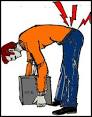
Lifting heavy objects in an incorrect way could lead back, neck, leg or even arm pain. Back pain after incorrect lifting techniques is especially common; this is due to compression on the intervertebral discs as well as undue strain onto the muscles which support your back.

Here are a few tips to left safely:

  1. Plan ahead: Consider the path you will follow while lifting. Ensure that there are no obstructions. Carefully consider if you will need a second or third person to help you. Should you ask someone to assist you, be clear on the instructions for your lift.
  2. Hold the object close to your body: The greater the distance from the spine, the greater overall load on the spinal column and its surrounding muscles. Should the object have an uneven weight, hold the heaviest portion closest to your waist. Also get a good grip on the object you are going to lift.
  3. Ensure your feet are shoulder width apart: this is your most stable position, however be ready to move your feet during the lift.
  4. Back straight and knees bent: Keeping the back straight ensures that no undue strain is placed on you back during the lift.
  5. Lift with your legs: your legs are much stronger than back muscles. The power for the lift should be generated by your leg muscles as you straighten your knees.
  6. Tighten your stomach muscles as you lift: by tightening these muscles you will give your spine added support thereby preventing back injuries.
  7. Swivel your feet not your back: Should you need to turn during your lift, ensure that you swivel your feet instead of twisting your back. Twisting your back whilst in a bend position can lead to intervertebral disc damage or muscular strains.
Physio

Preventing Sports Injuries

No Comments

The holidays are now behind us and many people are now returning to their normal routines. For many this includes starting up sports again or even re-starting the gym routine. Starting sporting activities again after a rest period needs to be done safely to avoid any injuries.

Here are some tips for preventing injuries during your sporting activities…

  • Warm up: Warm muscles are less susceptible to injuries. Good warm ups will slowly increase your heart rate as well as circulation to your muscles, tendons and ligaments. Warm ups also mentally prepare you for your workout. Warm ups could include gentle stretching exercises or even gentle cardio vascular exercises.
  • Wear and use proper gear for your sport: using proper sports gear such as appropriate protective guards or shoes can help to prevent sports injuries. Proper footwear help to absorb the forces and load placed on your feet, ankles and knees.
  • Listen to your body: Exercise does not need to hurt for it to be good for you. Do not exercise through your pain or immediately after an injury. Allow sufficient time for healing after sports injuries. Injuries can occur when the amount and intensity of exercises is excessive.
  • Keep hydrated: drink plenty of fluid when exercising to avoid dehydration. Remember that drinks that contain alcohol or caffeine can lead to dehydration.
  • Cool down: this will help prevent muscle stiffness and soreness. Cool downs assist in removing waste products from the muscles you have used during exercise. A cool down may include low intensity exercise for example stretching or jogging.
  • Know when to seek help: Never play or exercise through the pain of a sports injury. You should seek help from a doctor or physiotherapist if there is severe pain, swelling or numbness, if you cannot put weight on the area or if the joint does not feel normal or if it feels unstable.